Basic Definitions
Organs: Groups of cells and tissues specialized
to perform specific functions within the organism.
Organ Systems: Morphological units that carry out
the body's fundamental functions: relation (interaction with the
environment), nutrition, and reproduction.
The Limbs
Limbs :Girdle :Free Portion (Segments)
Upper Limbs
: Scapular (Shoulder) girdle: Arm, forearm, and hand
Lower Limbs
: Pelvic girdle: Thigh, leg, and foot
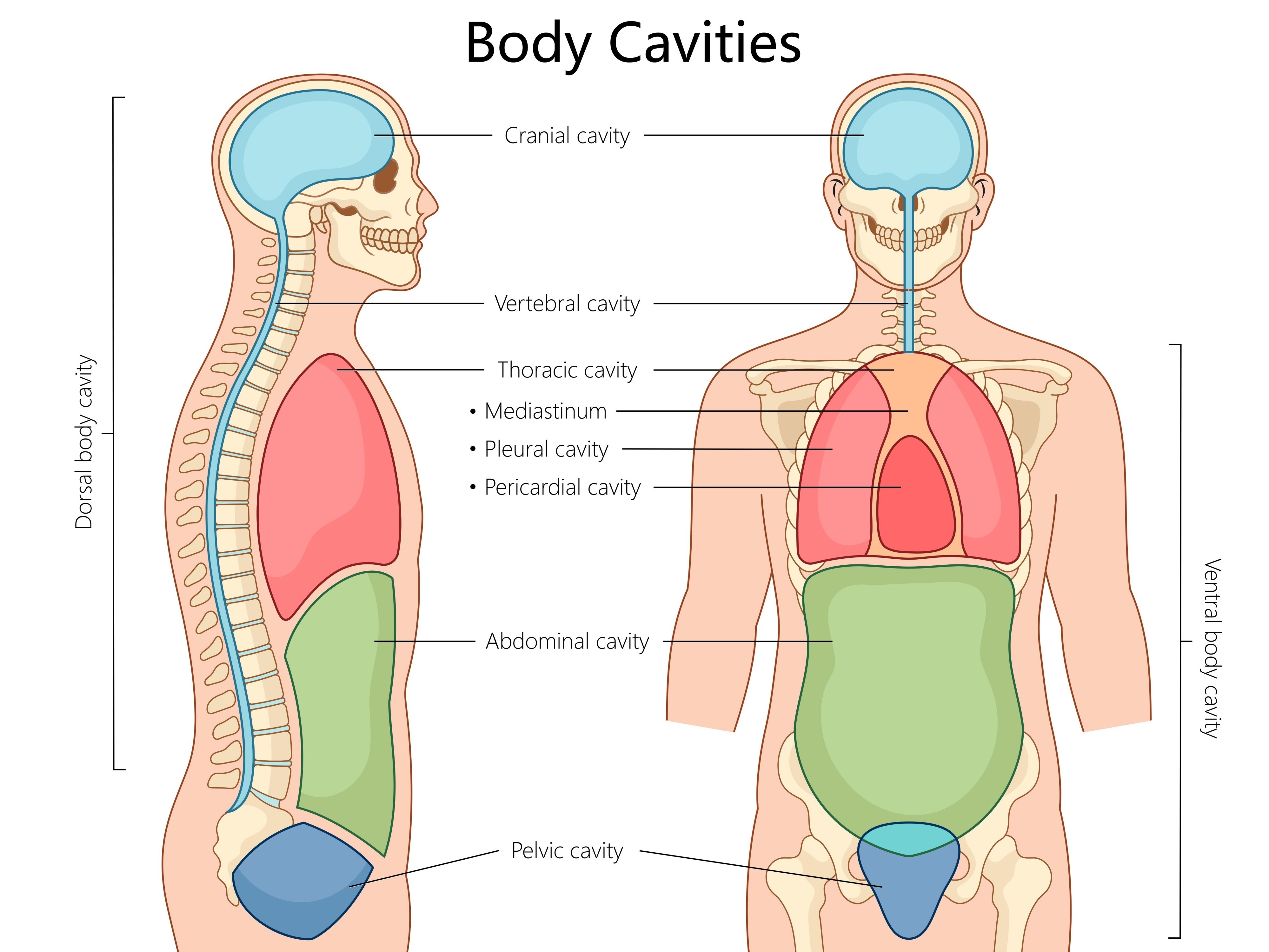
Cavities of the Human Body
The body is divided into two main cavity zones, which contain
specific spaces:
Dorsal Cavity (posterior):
Cranial Cavity: Houses the brain.
Spinal Cavity (vertebral canal): Houses the spinal
cord.
Ventral Cavity (anterior):
Thoracic Cavity: Contains the lungs (pleural
cavity), the heart (pericardic cavity), and the mediastinum.
Abdominal Cavity: Separated from the thoracic
cavity by the diaphragm muscle.
Pelvic Cavity:
Located in the lower part of the trunk.
Composition of the Human Body
The human body is a unified whole consisting of the head, neck,
trunk, and limbs.
The Head and Neck
Head: Composed of the cranial part
(neurocranium/skull) and the facial part (viscerocranium/facial
bones).
Neck (cervical region): Has a posterior part (the
nape) and an anterior part (the neck proper).
The Trunk Consists of three main segments
corresponding to the internal cavities: thorax, abdomen, and pelvis.