CLASSIFICATION
From a topographic point of view, the nervous system is classified into:
1. CENTRAL NERVOUS SYSTEM - consisting of: brain and spinal cord
a) The brain (located in the cranial cavity) is made up of:
- brainstem, consisting of the medulla oblongata, the pons of Varolio, the midbrain
- diencephalon, consisting of: thalamus, metathalamus, epithalamus, hypothalamus
- cerebellum
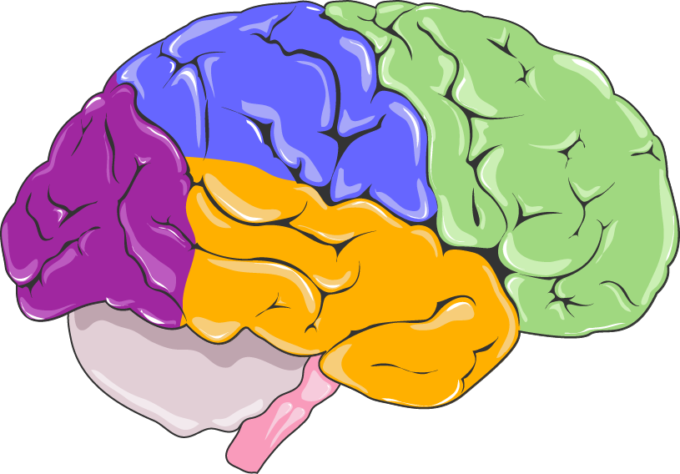
- cerebral hemispheres
b) The spinal cord is located in the vertebral canal, extending from the cervical vertebra C1 to the lumbar vertebra L2
2. PERIPHERAL NERVOUS SYSTEM - consisting of peripheral nerves and nerve ganglia.
• The peripheral nerves, made up of neuronal extensions, are represented by:
- the cranial nerves, in number of 12 pairs, are sensitive, motor and mixed
- the spinal nerves, in number of 31 pairs, are mixed
• The nerve ganglia formed by clusters of neuronal bodies, are represented by:
- spinal ganglia
- cranial ganglia
- vegetative ganglia.
From a functional point of view, the nervous system is classified into:
1. SOMATIC NERVOUS SYSTEM – of the life of the relationship, ensures somatic motor activity and sensory-sensory sensitivity depending on the conditions of the surrounding environment.
Role - integration of the organism into its living environment.
2. VEGETATIVE NERVOUS SYSTEM (VNS) - coordinates the activity of the internal organs (viscera) in different living conditions.
It has 2 components:
- parasympathetic, intervenes in ordinary living conditions
- sympathetic, intervenes in unusual, dangerous conditions
DISCOVER MORE
PERIPHERAL NERVOUS SYSTEM
The reflex function is carried out by the gray matter of the nervous system.
The distribution of the gray matter in the central nervous system is as follows:
- At the level of the spinal cord, the gray matter is arranged inward and has extensions, called horns:
• 2 anterior horns, containing somatomotor neurons
• 2 posterior horns, containing somatosensory neurons
• 2 lateral horns, containing vegetative neurons: visceromotor and viscerosensory
- In the brainstem, the gray matter is arranged internally fragmented into nuclei: motor, sensory, vegetative and proper
- In the cerebellum, the gray matter forms:
• on the outside - the cerebellar cortex
• on the inside - gray matter nuclei.
- In the diencephalon, there are masses of gray matter in the form of nuclei in all its components: thalamus, metathalamus, epithalamus and hypothalamus.
- In the cerebral hemispheres, the gray matter forms:
• on the outside - the cerebral cortex (cerebral cortex);
• on the inside - the basal nuclei (striated bodies)
DISCOVER MORE
AUTONOMIC NERVOUS SYSTEM
The autonomic nervous system is the part of the nervous system that coordinates visceral (unconscious) activity.
I. From a structural and functional point of view, the VNS is made up of:
• the sympathetic nervous system, which acts in unusual situations: fear, anger, fright
• the parasympathetic nervous system (cranial and sacral), which acts in ordinary situations of calm and relaxation of the body.
II. From a structural and topographic point of view it is similar to the somatic nervous system, being made up of:
• the central nervous system that includes:
- the command centers located in the spinal cord and brainstem;
- the control and vegetative integration centers in the hypothalamus, limbic system, cerebral cortex.
• the peripheral nervous system made up of vegetative ganglia and nerves.
The sympathetic nervous system:
- The sympathetic nerve centers are located in the spinal cord, in the lateral horns of the thoracic (T1-T12) and lumbar (L1-L2) regions;
- The peripheral part is represented by vegetative ganglia and preganglionic and postganglionic vegetative fibers
The parasympathetic nervous system:
- Parasympathetic nerve centers are located in the brainstem and in the lateral horns of the spinal cord in the sacral region.
- The peripheral part is represented by nerve fibers from the brainstem and spinal cord in the sacral region and vegetative plexuses.
THE NEURON
The neuron is the basic cell of the nervous system. It receives, processes, and transmits information. Neurons form complex networks in the body. Its structure includes the cell body, dendrites, and axon.
THE SYNAPSE
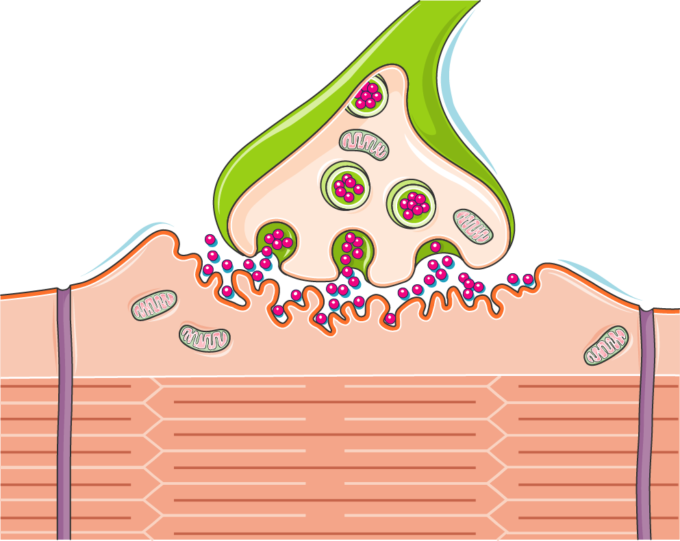
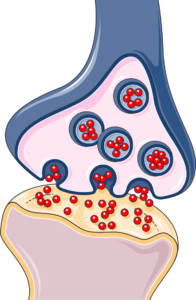
The synapse is the connection area between two neurons. Here, information is transmitted from one neuron to another. The transmission is done with the help of neurotransmitters.
NEUROTRANSMITT-
ERS
Neurotransmitters are chemicals that transmit messages between neurons. They are released at the synapse. Without them, communication in the nervous system would not be possible.
NERVOUS IMPULSE
A nerve impulse is an electrical signal that travels along a neuron. It allows for the rapid transmission of information. Thanks to the nerve impulse, the body can react promptly.
THE REFLEX
A reflex is a rapid and involuntary response to a stimulus. It serves to protect the body. Most reflexes are coordinated by the spinal cord.