How is the rainbow formed?
 The rainbow is an optical phenomenon that occurs when sunlight undergoes the phenomena of refraction, reflection and diffusion at the meeting with water droplets in the atmosphere, it has the appearance of a huge multicolored arc unfolding in the sky.
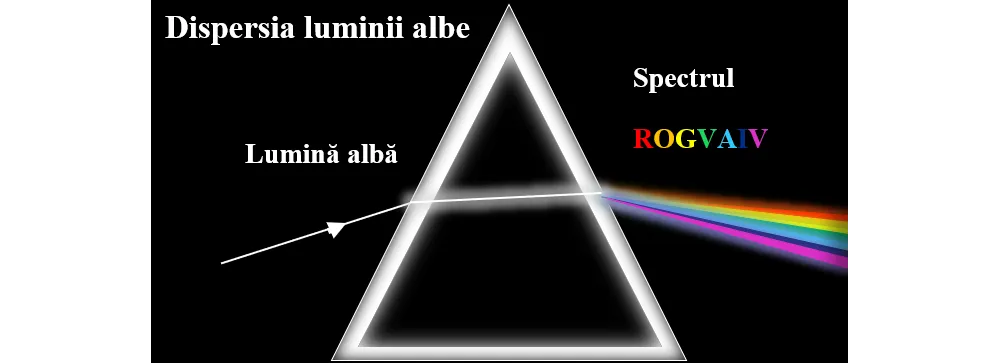
Upon contact with a small drop of water, white light is broken down into individual frequencies corresponding to the colors in the visible spectrum, by refraction, just like when entering an optical prism.
Some of the light inside the water droplet is reflected on contact with the opposite edge of the water droplet, and another decomposes once again when it comes out of the water droplet, amplifying the color separation.
The separation into individual frequencies combined with the existence of a large number of water droplets exposed to sunlight creates a circular rainbow.
Under what conditions can we observe a rainbow?
In order to witness such an optical phenomenon, two conditions need to be met.
First of all, the human observer needs to be positioned between the Sun and the water droplets. Small splashes of water can either come from rain, steam from a waterfall, or even from the spout of a garden hose.
The second condition is that the angle that the Sun, the splashes of water and the eyes of the observer form is in the range of 40o-42o. That is why it is necessary for the phenomenon to occur in sunny mornings or afternoons immediately after rain.
Otherwise, we, the people at ground level, would not have the position corresponding to the observation of the rainbow. The angle of 42o is due to the way in which the two successive refractions occur when the white light comes into contact with the water droplets.
What is the order of colors in a rainbow?
The order of colors in a rainbow is from small wavelengths in the outer arc to large ones in the inner arc. The sequence of colors from the outside to the inside is as follows: red, orange, yellow, green, blue, indigo, purple (ROGVAIV).
Who was the first person to explain how the rainbow appears?
Although Newton was concerned with and studied optical phenomena in detail throughout his life, a German monk in the early 14th century was the first man to discover how light reflects and refracts when it comes into contact with a drop of water.To support his hypotheses on this subject, the monk filled a sphere with water, directed a ray of sunlight towards it, and observed the separation of white light into the colors of the rainbow, as well as the reflection of light on contact with the opposite side to that through which the ray came into contact with the sphere.
The name of the German monk was Theodoric of Freiburg, and the year of his discovery and demonstration, 1304.
What does a "supernumerary" rainbow represent?
It is another name given to a double rainbow. The secondary rainbow has an inverted color spectrum, it is outside (above) the original rainbow, and its light intensity is significantly reduced compared to the first.Such a phenomenon occurs when there is an additional reflection of light inside the water droplets.Instead of reflecting once in the splashes of water, the light reflects twice, giving rise to a paler, mirrored image of the primary rainbow